Watch Jonathan's Story Now:
Jonathan, 15, joined Streatham-Croydon RFC in 2024, through TackleLondon’s community pathway, at a time when he was struggling to articulate the emotional weight of what he was carrying. Like many young people navigating complex emotions and challenging circumstances, his frustration often surfaced without the tools to manage it. TackleLondon entered Jonathan’s life with a clear goal: to provide both routine and trusted adults, through rugby, in a space in which he could be understood rather than judged.
Over time, the pitch became somewhere he could release emotion safely, build confidence and feel part of something stable. Through these sessions, he began to build self-esteem and develop greater control over his emotions –creating space for reflection, when reaction might otherwise have led him towards risk. Jonathan’s experience sits within a wider reality across London, where the spaces that allow young people to feel safe, supported and seen are rapidly shrinking. The impact of this reality is evident, according to the government policy paper Youth Matters: State of the Nation, published 10 December 2025:
- Between 2010/11 to 2022/23, spending on youth facilities fell by 73%.
- Out of 27 European countries, the UK is last in how happy 15-year-olds are with their life.
- Nearly half of young people spend the majority of their spare time in their bedroom.
- Less than half of all young people (aged 10 to 19) agree there are enough clubs and activities in their area.
As youth clubs close, school resources are stretched and community provision fails to keep pace with rising need, the absence of consistent, positive outlets is shaping lives in profound ways, particularly for teenagers living with emotional complexity or instability.
When young people lack reliable, safe spaces after school or trusted adults to confide in, frustration and anxiety have few structured outlets. Emotions they do not yet have the tools to process can quickly turn into anger, risk-taking or disengagement, particularly where poverty, trauma and social instability are present. In this context, grassroots programmes, like TackleLondon – a youth-focused charity that uses rugby and mentoring to support young people across London – are a necessity.
Founded in 2023, TackleLondon works with schools, community clubs and local partners to deliver structured rugby sessions alongside trauma-aware wellbeing support, creating consistent environments through coaches that are the same every week for their group. This creates the environment where young people feel safe, valued and understood. The aim is not simply to provide sport, but to build belonging, emotional regulation and positive long-term pathways, offering one of the few protective spaces capable of interrupting cycles of harm and exclusion.
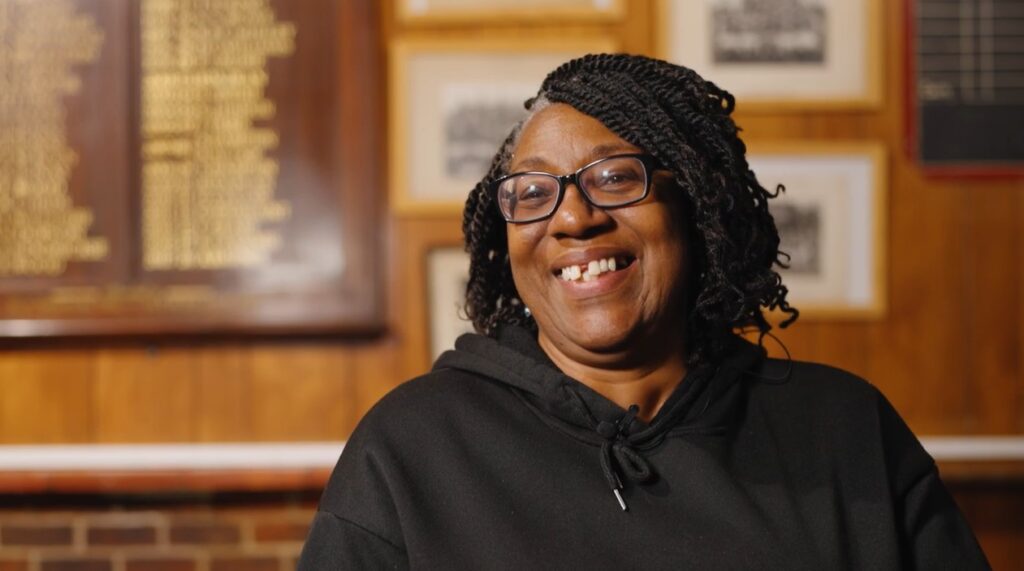
To understand what this work looks like at its most human level, we followed Jonathan to one of his free training sessions. Alongside the skills training and team talk, we spent time with Dr. Amy Atkinson, TackleLondon’s Education and Schools Manager, Jonathan himself, and Elaine, Jonathan’s mum, to explore the inner workings of sport for development in real time. Through their voices, we saw just how sports mentoring can quietly but powerfully change lives in lasting ways: confidence grows, emotions find safer outlets and trust builds between young people, families and mentors. This work has been made possible to date through funding from the New Deal for Young People London government grant, enabling TackleLondon to establish consistent delivery, train trauma-aware coaches and build the foundations of a programme that is now beginning to truly transform young lives.
Jonathan himself reflects honestly on where that lack of support and outlet was leading him:
For many young people, these “bad situations” are not isolated moments. They are often the product of growing up with limited safe spaces, inconsistent adult support and few constructive ways to release emotion.
Dr Amy Atkinson, TackleLondon’s Education and Schools Manager, puts it clearly:
“Unfortunately, there appear to be fewer and fewer safe places for young people to be in our communities. They're finding themselves in situations that nobody wants them to be in and they don't want to be in either.”
Research shows that young people who experience Adverse Childhood Experiences (ACEs) face significantly increased risks. Children and young people with two or more ACEs see the risk of:
- assault perpetrations increase by 19%
- weapon involvement increases by 57%
- gang involvement increases by 61%
(source: Youth Endowment Fund UK)
Further, around 10% of Londoners are likely to have experienced four or more different types of ACE, including abuse or neglect (source: london.gov.uk).
These figures do not define young people. But without the right support systems, they can shape the paths young people are directed onto. For Jonathan, rugby was the turning point:
“Now with me doing rugby, I feel like I know when to walk away from that situation. Maybe just kind of like take that moment of like, you know what? Can you give me a second to like kind of maybe calm down or maybe structure my feelings or my emotions.”
As Jonathan puts it,
“They don’t just ask me, like, how was that session? They have a conversation about how was school, how was home. It shows not only that my teammates care, but that the coaches care a lot. They actually want to know what your goals are in life – who you want to be and who you are as a person.”
Jonathan, here, beautifully articulates TackleLondon’s ambition: that through rugby, young Londoners can learn to recognise emotional responses and make better choices in moments of pressure. Using grassroots sport to teach these fundamental life skills cannot be undervalued. It is often in moments of heightened emotion that decisions become defining, shaping futures in lasting ways. Grassroots sports mentorship offers a practical, preventative intervention, creating communities that keep young people safe while equipping them with tools for life. Learning when to walk away from a situation, when to ask for a moment to calm down and how to understand and articulate feelings rather than be overwhelmed and lead by them are practical skills, reinforced week by week through training, teamwork and clear boundaries. Lessons through sports mentorship extend far beyond the pitch, supporting young people to regulate emotion, respond thoughtfully and carry those habits into everyday life.
Jonathan’s experience also speaks to why sports mentoring works where more rigid environments can fall short. He describes how TackleLondon sessions feel different from school: less formal, more human, with space for humour, conversation and regular moments of connection to develop trust naturally. Coaches can use humour to break down walls, creating emotionally safe environments where young people feel comfortable opening up. Delivered by trauma-aware coaches who understand how to de-escalate conflict and respond to behaviour with empathy rather than punishment, without compromising on accountability, TackleLondon’s sessions become a tool for confidence, emotional regulation and identity shaping.
That impact is visible to schools as well. Robyn Wallace, Assistant Head Teacher at Meridian High School, notes the immediate shift in engagement:
Together, these perspectives underline how sport, when paired with the right relationships, can reach young people in ways traditional systems often cannot.
For families, the impact is often as significant as it is for the young people themselves. Elaine saw her son move from frustration and volatility towards balance and purpose. What once came out as anger began to find expression through motivation to train, an enjoyment of teamwork and an understanding of how discipline keeps everyone safe.
“Rugby gives him the outlet now where he can actually express himself. I'm pleased that he's found his passion and the thing that makes him happy.[…] As a parent, it's like a lifeline. That support is just everything. It's everything for me.” – Elaine, Jonathan’s Mum
TackleLondon is profoundly grateful for the support provided through the New Deal for Young People programme, whose investment has been instrumental in enabling this work and in demonstrating the power of youth-centred, preventative provision. That support, which concluded in January 2026, helped create safe spaces, trusted relationships and meaningful opportunities for young people across London, and its impact is visible in stories like Jonathan’s. As the programme comes to an end, TackleLondon is now seeking new funding partnerships to build on this strong foundation and ensure that this vital work can continue. With the right backing, the progress made can be sustained and extended, ensuring more young people have access to the support, stability and opportunity they deserve.
If you would like to discuss funding opportunities or explore partnership possibilities, please contact Caitlin Clark at caitlin@tacklelondon.org or contact TackleLondon via the contact form below: